
Documentary aspects of the subsidiarity control in Spain. The Joint Committee for EU Affairs
Article Sidebar
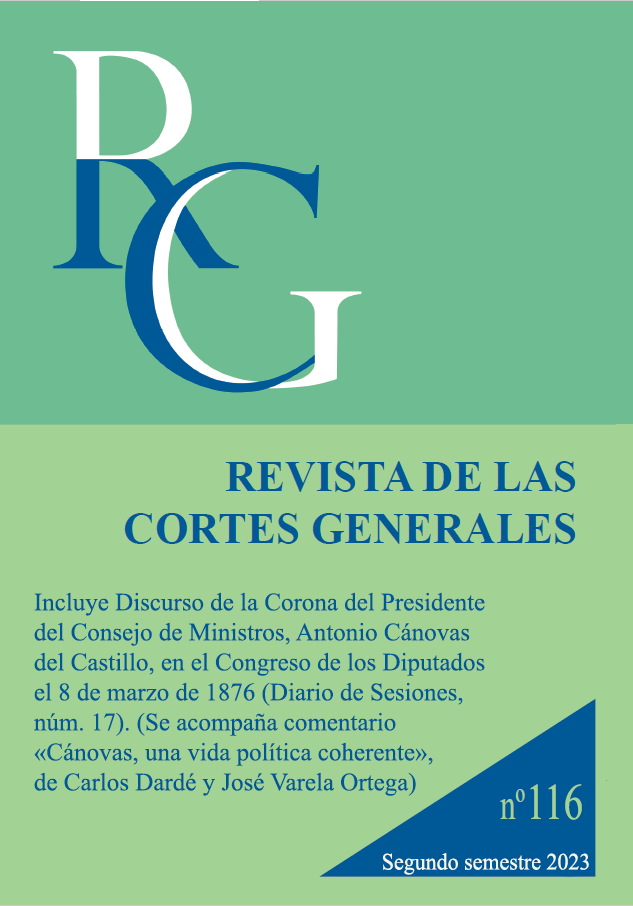
Main Article Content
Abstract
According to the principle of subsidiarity, the European Union will only intervene in areas that do not fall within its exclusive competence where the objectives of an action cannot be sufficiently achieved by the Member States, neither at central level nor at regional and local level. Through the “early warning system”, national Parliaments receive European legislative initiatives and can issue an opinion regarding compliance with the principle of subsidiarity. They also receive the documents that are generated in the processing of these initiatives throughout the European legislative procedure and another large amount of documentation in the framework of the “political dialogue”. The reception and processing of all this documentation has been channelled in Spain through the Joint Committee for the European Union. From there, European legislative initiatives are transferred to the Parliaments of the Autonomous Communities, who in turn can send an opinion on the compliance with the principle of subsidiarity. The Government also sends reports in this regard, and the Cortes Generales may request the Government to file an appeal before the Court of Justice of the EU for infringement of the principle of subsidiarity of European legislation.
The abundance and diversity of documents in circulation, as well as the variety of authors and deadlines to which their activity is subject, produce complex documentation to handle.
The article details the way in which all the documentation involved in the subsidiarity control activity in the Cortes Generales has been structured, controlled, and is disseminated.
Article Details
Downloads

This work is licensed under a Creative Commons Attribution 4.0 International License.
This work is licensed under a Creative Commons Attribution 4.0 International License.
© Congress of Deputies. The original copies published in the online and printed versions of this Journal constitute the property of the Cortes Generales, recognizing the need to refer to the authorship and source of every partial or total reproduction.
Unless otherwise specified, all contents of the online version are distributed under a distribution and usage license: “Creative Commons Attribution 4.0 International (CC BY 4.0)”. You can check the informative version and the legal document of the license freely.